

Treatments: Smell (Olfactory) Dysfunction

Diagnosis
The first step in treating olfactory dysfunction is to determine its cause, which may open treatment options. Examination by an otolaryngologist and often additional imaging (such as with a sinus CT scan) are helpful.
CAUSES OF OLFACTORY DYSFUNCTION
The causes of olfactory dysfunction can vary, including 1) decreased nasal airflow (specifically decreased airflow over the olfactory epithelium), 2) infections, 3) head injuries, 4) primarily neurologic conditions such as Parkinson's disease or Alzheimer's dementia, and 5) tumors.
If the pathway for airborne odorants to physically transit to the small patch of olfactory epithelium in the nose is blocked, their smell cannot be detected. Physical blockage of the air passage to the olfactory cleft may occur with swelling of the nasal lining (possibly from infection), nasal polyps (a specific condition of inflammation and swelling), scar tissue, tumor, and not breathing through the nose.
Infections, whether viral, bacterial, or fungal, can alter the olfactory nerve’s ability to transmit information to the brain, even when the odorant makes contact with the olfactory nerve fiber. An infection may damage the nerve, the nasal surface lining (mucosa) around the nerve fibers, the olfactory bulb, or brain structures or circuits. Restoration of olfaction may or may not occur after resolution of the infection. Nose and sinus infections commonly diminish olfaction.
Head injuries may injure the olfactory nerve directly.
Certain neurologic conditions have a high prevalence of olfactory dysfunction, such as in Parkinson’s disease (up to 100%), Alzheimer’s dementia (90%), and frontotemporal dementia (96%). The exact mechanism of how these conditions cause olfactory dysfunction is not completely understood.
A tumor of the nose/sinus or brain may compress or invade and destroy the olfactory nerve or brain structure/circuits. A tumor may also block access of air to the olfactory epithelium, which is described in #1 above.

UNBLOCKING the pathway to the smell nerves
When airflow is blocked from reaching the small patch of olfactory epithelium in the nose, opening this pathway may be helpful. This may be a matter of decreasing swelling (such as treating allergies), removing nasal polyps, or surgically correcting anatomic barriers (such as with septoplasty or turbinate reduction).
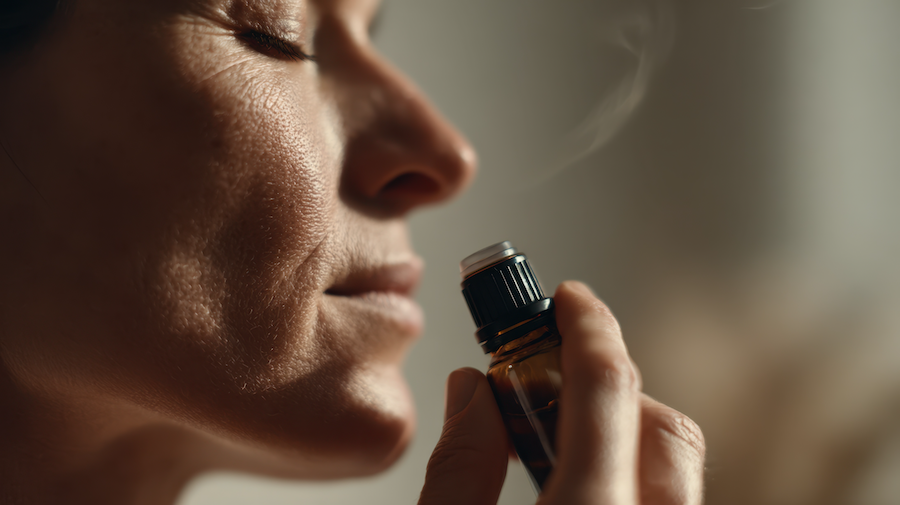
ODOR retraining
Olfactory retraining (also called smell training) is a structured, repeated exposure therapy designed to help recover or improve the sense of smell after damage to the olfactory system. It is commonly used for people with post-viral olfactory dysfunction (including after COVID-19), post-traumatic smell loss, or other causes of hyposmia or anosmia. The goal is to stimulate olfactory receptor neurons and central olfactory pathways to promote recovery, neuroplasticity, and improved odor identification and discrimination.
How it works
Repeated exposure: The person inhales selected odors deliberately and repeatedly, typically twice daily. Regular, mindful sniffing provides consistent sensory input to the olfactory system.
Variety of odors: Traditional protocols use a set of four distinct odors representing different odor categories—usually floral, fruity, aromatic (e.g., spices), and resinous/woody. Common choices are rose, lemon, clove, and eucalyptus. Modern adaptations may use more odors or rotate scents every few weeks.
Duration and technique: Each odor is sniffed gently for about 10–20 seconds, with short pauses between scents, totaling roughly 20–30 minutes per session (often split into two 5–10 minute sessions daily). The person should focus attention on the scent and try to recall or imagine its qualities.
Timeframe: Benefits are gradual. Many people see measurable improvement after 8–12 weeks, with continued gains over 6–12 months in some cases. Long-term practice may be needed.
Proposed mechanisms
Peripheral regeneration: Repeated stimulation may support regeneration and maturation of olfactory receptor neurons in the nasal epithelium.
Central nervous system plasticity: Regular olfactory input and active attention can encourage reorganization and strengthening of olfactory pathways and cortical odor-processing areas.
Cognitive/attentional effects: Focusing on smells and attempting to identify them may improve perceptual sensitivity and recall, reducing anosmia-related distortions like parosmia.
Evidence and effectiveness
Clinical studies show modest but consistent improvements in olfactory function (measured by odor threshold, discrimination, and identification tests) compared with no-treatment controls.
Greater benefit is often reported when retraining is started earlier after onset and when practiced consistently.
Effect size varies by cause of smell loss, age, and duration before treatment; people with long-standing or severe damage may see less recovery.
Olfactory retraining is low-risk, noninvasive, and inexpensive, so it is widely recommended even where benefits are uncertain.
Practical steps to start
Choose a set of distinct, familiar odors (commercial smell kits exist, or use household items such as lemon, rose-scented product, clove, and eucalyptus/menthol).
Twice daily, in a quiet environment, take 10–20 seconds to inhale each scent gently while paying attention to its qualities; rest briefly between scents.
Maintain a simple diary noting perceived intensity, identification, and any changes (this helps track progress).
Continue the program for at least 12 weeks; consider extending to 6–12 months if gradual improvement occurs.
Safety and contraindications
Generally safe. Avoid sniffing substances that are irritating, toxic, or allergenic.
Do not inhale strong chemical fumes; use only safe, food-grade or commercially prepared odorants.

This page